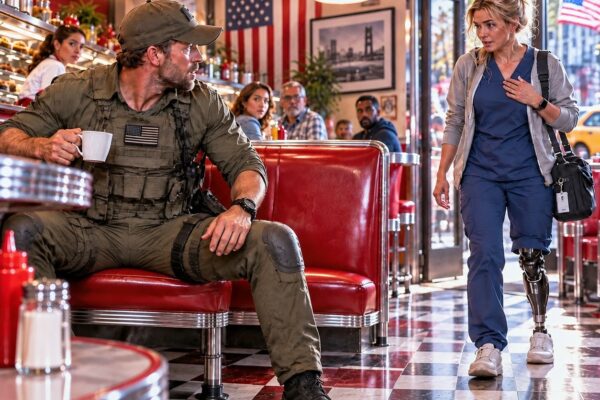
THEY MOCKED ME FOR BEING THE NURSE WITH SHAKING HANDS, NEVER KNOWING I HAD ONCE DIRECTED AIRSTRIKES UNDER ENEMY FIRE—THEN A MASSIVE EXPLOSION SENT DOZENS OF SOLDIERS INTO MY EMERGENCY ROOM, AND WHEN ONE DYING PARATROOPER RECOGNIZED THE TATTOO ON MY WRIST, EVERYONE FINALLY DISCOVERED WHO I REALLY WAS.
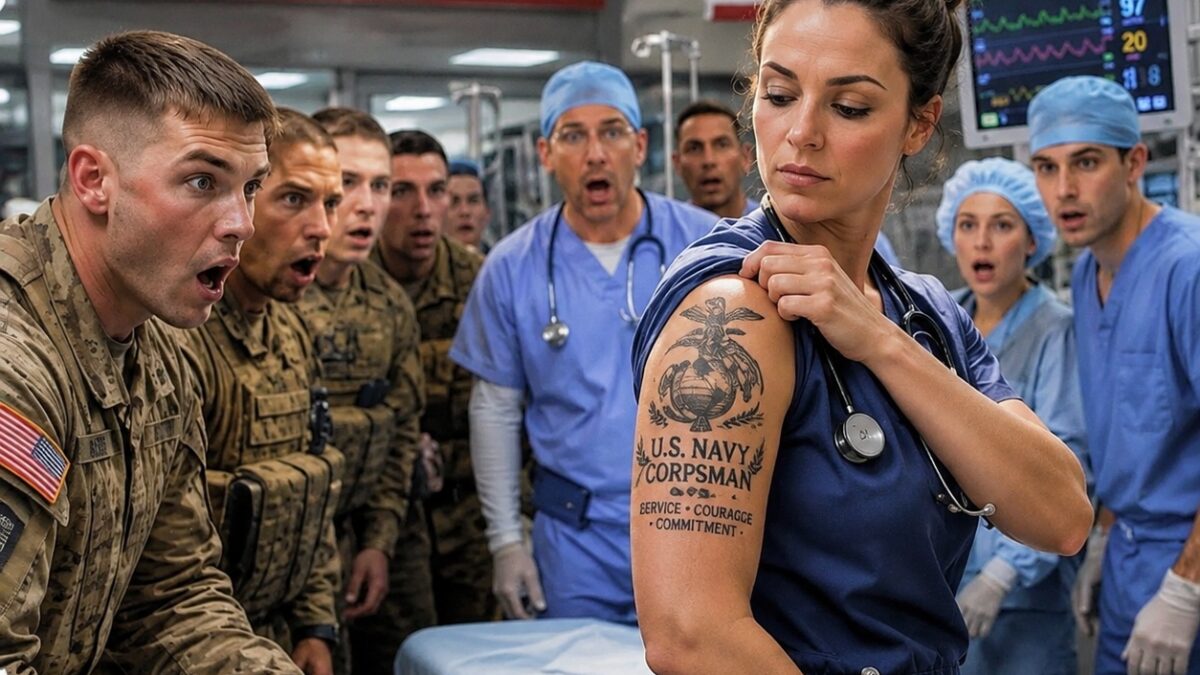
THEY MOCKED ME FOR BEING THE NURSE WITH SHAKING HANDS, NEVER KNOWING I HAD ONCE DIRECTED AIRSTRIKES UNDER ENEMY FIRE—THEN A MASSIVE EXPLOSION SENT DOZENS OF SOLDIERS INTO MY EMERGENCY ROOM, AND WHEN ONE DYING PARATROOPER RECOGNIZED THE TATTOO ON MY WRIST, EVERYONE FINALLY DISCOVERED WHO I REALLY WAS.
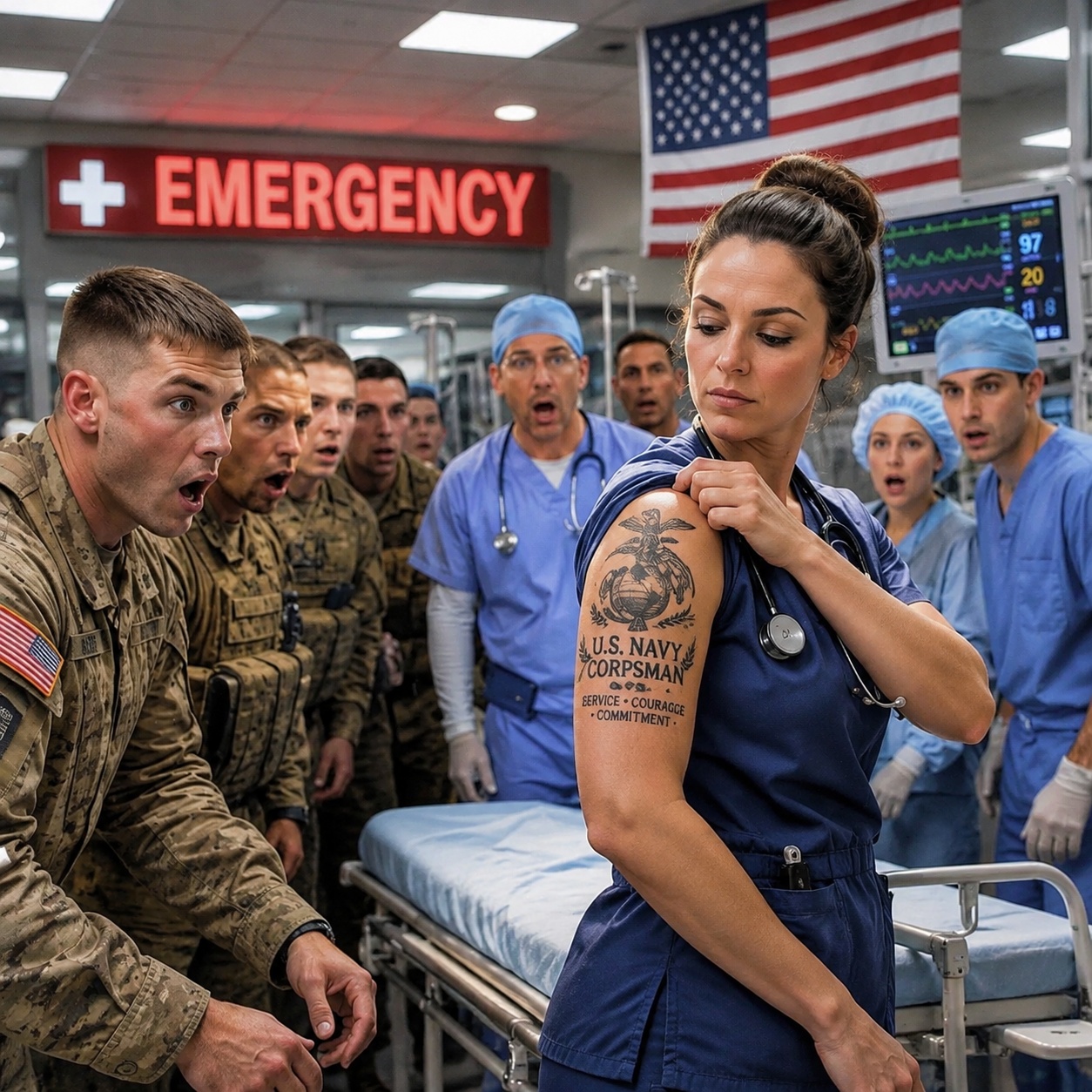
PART 1 — THE NURSE WHO WAS NEVER SUPPOSED TO BE A HERO
They called me the weakest nurse in the emergency department.
They laughed when my hands trembled, mocked me for keeping my sleeves pulled down, and assumed I had chosen nursing because I was too afraid to do anything more demanding.
None of them knew I had once directed American fighter aircraft through enemy territory while bullets struck the ground around me.
None of them knew that two years earlier, I had watched two men die because of a decision I could never forgive myself for making.
And none of them knew that before that afternoon ended, I would be forced to become the woman I had spent two years trying to bury.
My name is Megan Carter. I was thirty-three years old, and I worked as an emergency room nurse at a military medical center outside Fayetteville, North Carolina.
I had been there for eight months.
Eight months of oversized blue scrubs, quiet conversations, and deliberately avoiding attention.
My coworkers thought I was shy.
Some thought I was incompetent.
Staff Sergeant Dale Prescott thought I was an easy target.
He was assigned to the Army liaison office and frequently visited our department. He had a habit of making jokes at other people’s expense, especially when he had an audience.
One Tuesday morning, he leaned against the nurses’ station while three younger soldiers stood behind him.
“Careful with that clipboard, Carter,” he said. “Wouldn’t want you shaking it so hard you lose the paperwork.”
The soldiers laughed.
I kept writing.
Prescott glanced at my hands.
“Seriously, what’s wrong with you? You look like you’re about to faint every time someone raises their voice.”
“I’m fine, Sergeant.”
“Then maybe you should try looking like it.”
Charlotte Reyes, our charge nurse, looked up from her computer.
“Prescott, don’t you have somewhere else to be?”
He shrugged.
“I’m just making conversation.”
“Find another conversation.”
He smiled and wandered away.
Maria Delgado, a young emergency technician who had become my closest friend at the hospital, approached me with a tray of supplies.
“You don’t have to let him treat you like that.”
“It’s easier if I ignore him.”
“That’s what you always say.”
I smiled faintly.
Maria studied me.
“You know, sometimes I think you’re deliberately trying to disappear.”
I didn’t answer.
Because she was right.
Two years earlier, I had been Staff Sergeant Megan Carter, a member of the Air Force Special Tactics community.
My specialty was combat control.
I coordinated aircraft, directed close air support, established landing zones, and helped ground teams survive in places where one incorrect coordinate could cost an entire squad its life.
I had been trained to remain calm when everything around me was falling apart.
Until the night I lost two men.
Their names were Staff Sergeant Owen Brooks and Airman Daniel Vance.
We were operating near Kandahar, Afghanistan.
Our team needed an emergency extraction. I coordinated the aircraft’s approach, calculated the wind, checked the terrain, and transmitted the landing coordinates.
Everything looked correct.
But an enemy position hidden beyond a ridge had escaped our intelligence assessment.
The helicopter entered the extraction area.
The ridge erupted.
Brooks died before the rescue team could reach him.
Vance died aboard the damaged aircraft.
I survived.
That was the part I never learned how to accept.
After returning home, I left active service for medical and psychological reasons.
I couldn’t bear another radio.
I couldn’t bear the sound of helicopters.
Most of all, I couldn’t bear the possibility that someone might look at me and expect me to make another life-or-death decision.
Nursing felt different.
I could help people without having to direct aircraft or carry the responsibility of an entire operation.
At least, that’s what I told myself.
Then the emergency radio interrupted our morning.
“Multiple casualties. Training incident at Fort Liberty. Repeat, multiple casualties. Possible unexploded ordnance detonation. First units arriving in twelve minutes.”
Charlotte immediately stood.
“Clear trauma bays one through six. Get the blood inventory. Notify surgery.”
The entire department changed in seconds.
Gurneys moved.
Equipment was checked.
Doctors rushed toward the trauma rooms.
I reached for a pair of gloves.
Then another radio transmission came through.
“Confirmed blast injuries. Burns, fractures, penetrating trauma. At least twelve casualties. Additional patients incoming.”
My pen stopped.
Something about the report bothered me.
An unexploded device on a supposedly cleared training range shouldn’t have been there.
Someone had made a mistake.
And people were about to pay for it.
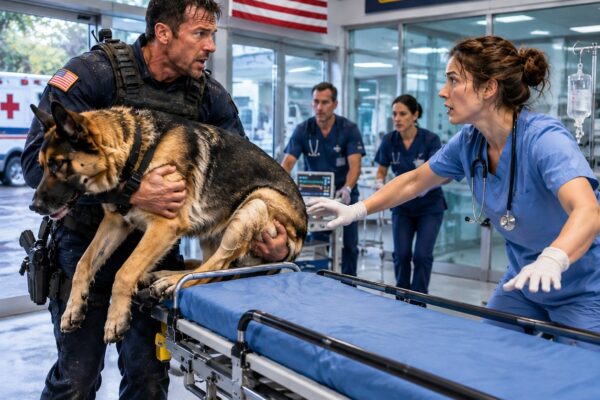
The first ambulance arrived at 11:47.
A young paratrooper came through the doors with a badly injured leg. His face was covered in dust, and he was screaming for someone to call his mother.
I helped transfer him onto a trauma bed.
The next patient arrived with chest injuries.
His name was Corporal Danny Ruiz.
He was barely twenty-two.
His breathing was rapid and shallow, and his skin had begun turning gray.
I examined him and immediately recognized signs of a life-threatening chest injury.
“Get the trauma physician!” I called.
The attending doctor, Dr. Samuel Halverson, was treating another critical patient.
“Give me a minute, Carter!”
Danny didn’t have a minute.
I looked at the nurse beside me.
“Bring the emergency equipment. Now.”
She hesitated.
“Dr. Halverson said to wait.”
“I’ll take responsibility.”
My voice sounded different.
It was no longer the quiet voice everyone had grown accustomed to hearing.
My hands moved with the precision of someone who had performed under far worse conditions.
We stabilized Danny while the physician arrived to continue his treatment.
His breathing gradually improved.
Dr. Halverson looked at me.
“Where did you learn to recognize that so quickly?”
“Experience.”
He didn’t look convinced.
Before he could ask another question, a second ambulance arrived.
Then a third.
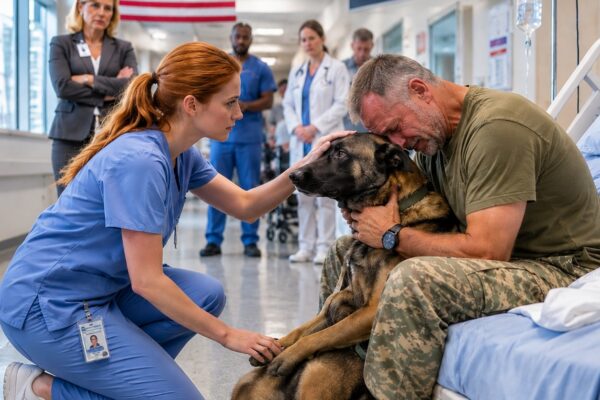
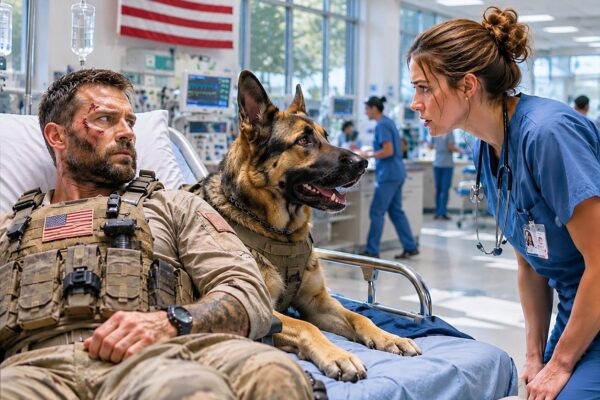
The emergency department became a storm of shouting, alarms, blood products, and exhausted medical personnel.
I worked through it without stopping.
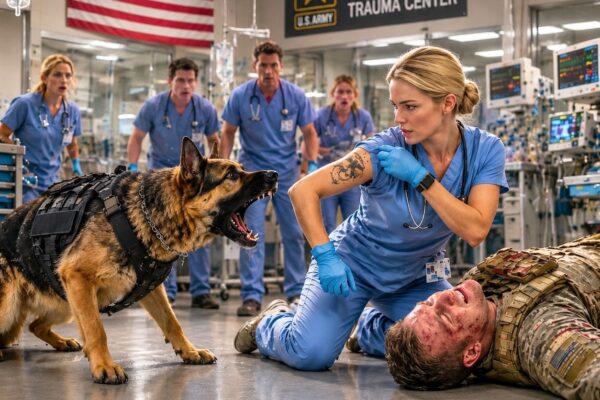
But during one procedure, my sleeve slipped above my wrist.
A small tattoo became visible.
It showed a military insignia, a lightning bolt, and a shield.
Danny Ruiz noticed it.
He was conscious enough to turn his head.
“Ma’am…”
I leaned closer.
“Don’t talk. Save your strength.”
He stared at my wrist.
“That’s not an Army tattoo.”
My stomach tightened.
He swallowed.
“That’s Special Tactics.”
I pulled my sleeve down.
“You’re confused. Just breathe.”
But Danny wasn’t finished.
“Shepherd…”
I froze.
That name hadn’t been spoken to me in two years.
It was my old operational call sign.
I looked at him.
His fingers weakly caught my wrist.
“Kandahar,” he whispered. “The extraction ridge. You were the one talking to the aircraft.”
The room seemed to go silent.
Danny struggled to continue.
“I was on communications that night. I was nineteen. I thought we were all going to die.”
He looked directly into my eyes.
“But you kept talking. You never stopped.”
My throat tightened.
“You got us through the worst of it, Shepherd.”
Behind me, Charlotte had stopped moving.
Maria stood in the doorway.
And Staff Sergeant Prescott, who had spent the entire morning laughing at me, was staring at my tattoo.
For the first time, nobody was laughing.
I finished stabilizing Danny and stepped away.
Twenty minutes later, Dr. Halverson found me alone in the supply room.
He closed the door.
“All right, Carter. I think it’s time you told me who you really are.”
I looked down at my trembling hands.
“I used to be in the Air Force.”
“Doing what?”
I took a breath.
“Combat Control. Special Tactics.”
His expression changed.
He understood immediately.
“You’re a JTAC?”
I nodded.
“Then why are you working here as a regular floor nurse?”
“Because I lost two men on my last deployment. And I couldn’t keep doing that job.”
He didn’t interrupt.
I told him about Brooks and Vance.
About the extraction.
About the coordinates.
About how I had spent two years believing that if I had made one different decision, those men might have come home.
Dr. Halverson listened quietly.
Finally, he said something I wasn’t expecting.
“You know, Carter, you can leave the military, but that doesn’t mean your training disappears.”
I looked away.
“I wish it did.”
Before he could respond, the hospital’s emergency announcement system crackled.
“All available personnel to the command post. Immediate.”
We both turned toward the speaker.
“Fort Liberty reports a second unexploded device on the training range. Device remains active and unstable. Six personnel are trapped inside the danger area.”
A second announcement followed.
“Air support is inbound. However, no qualified ground controller is currently available to coordinate the aircraft’s approach.”
I felt the blood drain from my face.
Then another voice came through the radio.
“Command is requesting anyone with current tactical air-control certification. We need a qualified controller immediately. Six lives are at risk.”
I looked toward the hallway.
Prescott was standing there.
His face had gone completely pale.
I walked toward him.
“Sergeant, did you sign the clearance paperwork for that training range this morning?”
He stared at me.
And his silence told me everything.
PART 2 — THE CALL SIGN THEY THOUGHT WAS GONE FOREVER
Prescott finally lowered his eyes.
“I signed the clearance.”
I waited.
He swallowed.
“The engineering team sent me the previous survey. I was supposed to inspect the range myself on Tuesday, but I missed the appointment.”
“Then why did you sign it?”
“I thought the conditions were unchanged.”
I stared at him.
“Did you actually inspect the ground?”
He shook his head.
For a moment, I couldn’t believe what I was hearing.
Six soldiers were trapped near an unstable explosive device because a man had signed a document he hadn’t earned the right to sign.
“I didn’t think anything would happen,” he whispered.
I felt anger rise inside me.
“You didn’t think?”
My voice remained quiet.
But everyone in the hallway heard me.
“You signed off on a dangerous training area without inspecting it. Now six men are waiting for someone to get them out.”
Prescott looked as though he wanted to disappear.
I turned toward the radio.
“How long until the aircraft arrives?”
“Approximately seven minutes,” the dispatcher answered.
“Do we have a qualified controller on the ground?”
“Negative. The closest available team is too far away.”
I looked at Dr. Halverson.
He understood before I said anything.
I reached for the radio.
“This is Staff Sergeant Megan Carter, former 24th Special Tactics Squadron. JTAC qualified. I can coordinate the approach.”
The hallway fell silent.
A voice came through the radio almost immediately.
“Confirm your identity, Staff Sergeant Carter.”
I closed my eyes briefly.
Then I answered.
“Call sign Shepherd. Requesting direct communication with the aircraft and the ground team.”
There was a pause.
Then the dispatcher replied.
“Copy, Shepherd. Stand by.”
For the first time in two years, I heard someone use my old call sign without it feeling like an accusation.
The aircraft pilot came onto the channel.
“Shepherd, this is aircraft lead. We understand you have the coordination.”
“That’s correct. I need your position, current weather conditions, and the latest ground coordinates.”
I listened carefully.
My mind began working in a way I hadn’t allowed it to work for two years.
I reviewed the terrain information.
I considered the wind.
I coordinated with the ground commander and confirmed the location of the unstable device.
The pilot waited for instructions.
“Shepherd, we have changing wind conditions. Confirm your recommended approach.”
I looked at the map on the command-post screen.
My fingers tightened around the radio.
For one brief moment, I wasn’t in North Carolina anymore.
I was back in Afghanistan.
I could almost hear the static from that night.
I could almost hear Brooks laughing about the terrible coffee.
I could almost hear Vance checking the team’s position.
Then I remembered why I had left.
And I remembered why I had to keep going.
“Aircraft lead, maintain your current holding position. I’m coordinating the safe extraction corridor with the ground team. Do not descend until the route is confirmed.”
“Copy.”
The next several minutes were the longest of my life.
I coordinated the approach using the verified information coming from the ground team and the aircraft.
Every instruction was confirmed.
Every movement was checked.
Nobody was allowed to rush.
The six trapped soldiers were positioned behind a protective earth barrier, unable to move without entering the dangerous area.
I needed to get them out without exposing them or the aircraft to additional danger.
“Ground team, confirm your position.”
“Confirmed. Six personnel accounted for.”
“Remain behind cover. We are establishing the extraction sequence.”
The pilot reported changing conditions.
I adjusted the plan and waited for confirmation.
Around me, hospital personnel had gathered.
Charlotte stood beside Dr. Halverson.
Maria was holding her hands together.
Prescott remained near the wall, looking at the floor.
I could feel everyone watching me.
But I wasn’t thinking about them.
I was thinking about six young soldiers who wanted to go home.
Finally, the aircraft reported that the approach conditions were acceptable.
I checked the information again.
Then I gave the final coordination instruction.
“Ground team, you are clear to begin the extraction sequence. Follow the confirmed route. Do not deviate.”
For several seconds, there was nothing but radio static.
Then a voice came through.
“Shepherd, this is ground lead.”
My heart pounded.
“Go ahead.”
“All six personnel are aboard. We are clear of the hazard area.”
I closed my eyes.
“Confirm all six accounted for.”
“Six confirmed. No additional casualties.”
I lowered the radio.
Nobody spoke.
Then Charlotte exhaled.
Maria began crying.
Dr. Halverson placed a hand on my shoulder.
“You just brought six people home.”
I looked down.
My hands were trembling again.
But this time, I didn’t feel ashamed of them.
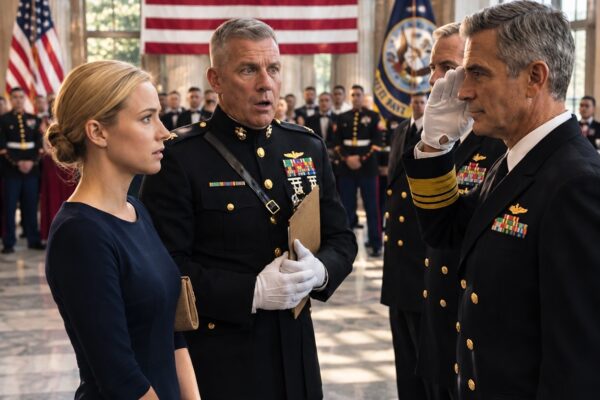
About an hour later, Colonel James Marshall arrived from Fort Liberty.
He was a senior officer with a reputation for being direct and difficult to impress.
He entered the staff lounge and immediately recognized my tattoo.
“Staff Sergeant Carter?”
I stood automatically.
“Sir.”
“At ease. You’re not in uniform anymore.”
He studied me.
“I read the report. You’re the former JTAC who coordinated the extraction?”
“Yes, sir.”
“Your separation records indicated you needed time away from operational duties.”
“I did.”
He nodded.
“Your work today was exceptional. Six soldiers are alive because you were here.”
I didn’t know what to say.
Then his expression became more serious.
“I also reviewed the original range clearance.”
He turned toward Prescott.
“Sergeant, I have some questions about your inspection report.”
Prescott stood up.
“Sir, I can explain.”
“I hope so. Because the engineering records show that the previous survey identified an area requiring additional inspection. Your clearance did not reflect that.”
Prescott looked down.
Colonel Marshall continued.
“Your decision put personnel in unnecessary danger. You’ll be returning to base with me. There will be a formal investigation.”
Prescott nodded.
Before leaving, he approached me.
“Staff Sergeant Carter…”
I looked at him.
“I’m sorry.”
I waited.
“For the jokes. For the way I treated you. I thought you were weak.”
I studied his face.
“You didn’t know anything about me.”
“I know that now.”
“No,” I said quietly. “You know what I used to do. That’s different.”
He looked confused.
I continued.
“You shouldn’t need to discover someone’s military history before deciding to treat them with respect.”
He lowered his head.
I turned away.
There was nothing else I needed to say.
Later that evening, I sat alone in the hospital cafeteria.
My coffee had gone cold.
Maria approached with two fresh cups.
She placed one in front of me.
“So,” she said, pulling out a chair. “Shepherd.”
I smiled faintly.
“Apparently.”
“Why didn’t you tell me?”
I looked at her for a long moment.
“Because I didn’t want to be that person anymore.”
“What person?”
“The person everyone expected to be strong all the time.”
I looked down at my hands.
“After Afghanistan, I couldn’t sleep. I couldn’t hear a helicopter without remembering that night. I started wondering whether I deserved to keep doing a job where other people depended on my decisions.”
Maria listened without interrupting.
“I thought if I became ordinary enough, maybe the memories would eventually stop following me.”
“Did it work?”
I shook my head.
“No. I just got better at pretending.”
She reached across the table.
“You don’t have to pretend here.”
For the first time, I believed someone might actually mean that.
Three days later, I received a phone call from Colonel Marshall.
He had an offer.
The military wanted me to consider returning in a training and advisory capacity.
They needed someone who understood both battlefield coordination and emergency medicine.
They wanted me to teach combat trauma response to military and civilian medical personnel.
I thanked him.
But I didn’t immediately accept.
“I don’t think I can go back to the field, sir.”
“I’m not asking you to.”
I looked out the window.
“What exactly are you asking me to do?”
“Help us prepare the people who will be standing in the emergency room when the next disaster happens.”
I thought about Danny Ruiz.
About the soldiers who had arrived covered in dust and blood.
About the six men waiting behind that earth barrier.
And about Brooks and Vance.
For two years, I had believed my only choices were to return to combat or disappear completely.
Now I was being offered something different.
“I have one condition,” I said.
“What’s that?”
“I want to build a joint training program. Military medics, civilian nurses, emergency technicians, and physicians. I want them learning together.”
There was a pause.
Then Colonel Marshall answered.
“Write the proposal. I’ll support it.”
Three weeks later, I stood in front of a training room filled with nurses, physicians, and military medics.
My sleeves were rolled up.
My tattoo was visible.
I had stopped trying to hide it.
Danny Ruiz sat in the front row, his injured leg supported by a brace.
He had survived surgery and was beginning rehabilitation.
When I entered, he smiled.
“Morning, Shepherd.”
The room laughed softly.
I shook my head.
“Good morning, Corporal.”
He raised his hand.
“I just wanted to say thank you.”
I looked at him.
“For what?”
“For not giving up on us.”
I couldn’t answer immediately.
I turned toward the whiteboard and began the lesson.
We spent the morning discussing trauma response, emergency coordination, and the importance of recognizing critical injuries before they became irreversible.
The program grew quickly.
Within three months, the hospital had approved funding for four training groups.
Maria became one of my assistants.
Charlotte helped coordinate the emergency department’s participation.
Even Dr. Halverson began attending the sessions.
One afternoon, after class, he approached me.
“You know something, Carter?”
“What?”
“I used to think the strongest people in this hospital were the ones who never seemed afraid.”
I smiled.
“And now?”
“Now I think they’re the ones who keep showing up even when they’re afraid.”
I considered that for a moment.
Then I nodded.
“That’s probably closer to the truth.”
A few weeks later, I visited a small memorial near the military training grounds.
Two names were engraved on the stone.
Staff Sergeant Owen Brooks.
Airman Daniel Vance.
I brought two small American flags and placed them beneath their names.
For a long time, I stood there without speaking.
Then I finally said what I had been trying to say for two years.
“I brought six more home today.”
The wind moved gently through the trees.
“I don’t know if that makes anything better. I don’t think it does.”
My eyes filled with tears.
“But I want you to know I haven’t stopped helping people.”
I thought about the extraction that had gone wrong.
About the decisions I had made.
About the things I could never change.
And for the first time, I allowed myself to understand something.
I had spent two years treating survival like a debt I could never repay.
But those men had never asked me to spend the rest of my life punishing myself.
They had trusted me because they believed I could help people.
Maybe the best way to honor that trust was to keep doing exactly that.
I wiped my face and stepped away from the memorial.
My hands were trembling.
They always might.
But I no longer believed that made me weak.
The following Monday, I returned to the emergency department.
Prescott was gone, pending the investigation.
The teasing had stopped.
But the most important change wasn’t that people suddenly knew my military history.
It was that they began treating one another differently.
Maria told me that a new nurse had been struggling with anxiety during night shifts.
She had asked if I could speak with her.
I found the young woman in the break room, sitting alone with her hands wrapped around a paper cup.
She looked embarrassed when I entered.
“Sorry. I know I’m being ridiculous.”
I sat beside her.
“You’re not.”
“My hands shake whenever the trauma alarm goes off.”
I looked at her fingers.
Mine were trembling slightly, too.
“Mine do sometimes.”
She looked surprised.
“But you handled that disaster.”
I smiled.
“Being capable doesn’t mean being fearless.”
She stared at me.
I continued.
“It means learning what to do even when fear is sitting right beside you.”
She nodded slowly.
I stayed with her until she felt ready to return to work.
Then I walked back toward the trauma bays.
The alarms were sounding.
A new ambulance was arriving.
And for the first time in two years, I didn’t wish I could disappear.
I wasn’t the frightened nurse everyone had mistaken me for.
I wasn’t the soldier I had once been, either.
I was someone who had survived both lives and finally understood that neither one had to erase the other.
My hands still shook.
But they had never stopped knowing how to help someone.
And that was enough.
Because strength isn’t the absence of fear. Sometimes, it’s the decision to keep your hands steady long enough to save another life—even when your own heart is breaking.